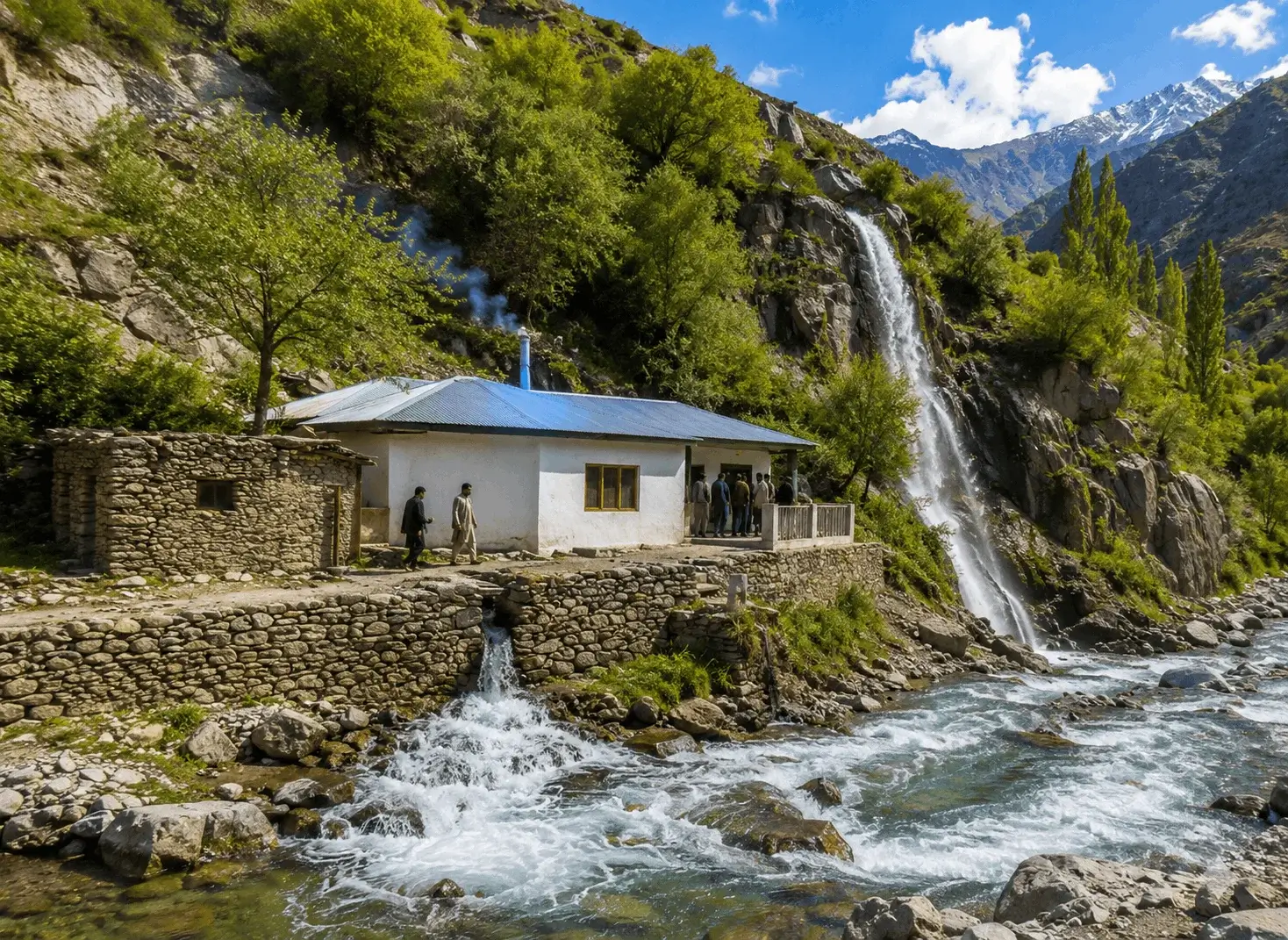
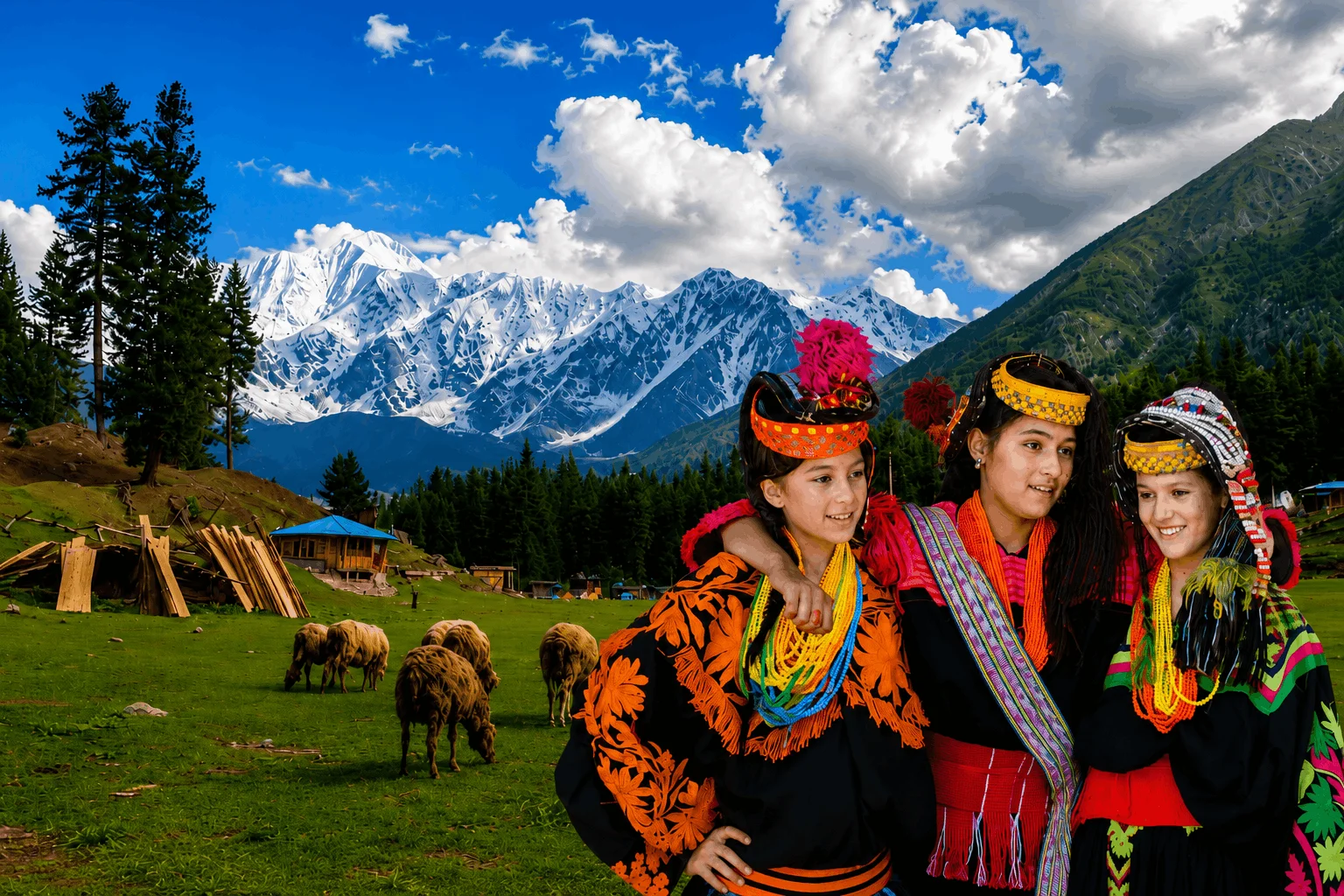
Chitral and Kalash Tour: Mountains, Culture and Festivals
Travel from the mountain town of Chitral into Bumburet, Rumbur and Birir, where village life, seasonal farming, sacred places and the Kalash festival calendar remain closely connected.
Our tour combines practical travel planning with local cultural guidance. Come for the Hindu Kush landscapes, stay long enough to understand the people and traditions that give these valleys their meaning.
Private, family and small-group tours with local guides, suitable vehicles and date-specific planning.
Government-licensed Pakistani tour operator with team members from the Kalash region.
What Is a Chitral and Kalash Tour?
A cultural and scenic trip through Chitral town and the three main Kalash valleys Bumburet, Rumbur and Birir.
The Kalash valleys are not a staged attraction. They form a living cultural landscape where homes, fields, forests, ceremonial places and seasonal rituals continue to serve the Kalash community. UNESCO added the Kalasha Valley Cultural Landscape to Pakistan's World Heritage Tentative List on March 9, 2026 an important recognition, but not yet full World Heritage inscription.
Chitral and Kalash Tour at a Glance
Routes, vehicles, accommodation and public festival access are confirmed for your actual travel dates before final booking.
Chitral: Begin Your Tour with Context
A thoughtful Chitral tour starts with more than a hotel stop. The town allows visitors to understand the geography, history and communities of the wider region before continuing toward Kalash.
Walk through the town, observe local markets and pause by the Chitral River while your guide explains how the area developed as a mountain crossroads.
The Shahi Mosque stands close to Chitral Fort on the riverbank. Its construction was completed in 1924 during the rule of Shuja ul-Mulk. Nearby historic properties may be restricted every visit follows current local permission.
Where route, weather and park access allow, a nature-focused extension toward Chitral Gol National Park and its mountain viewpoints.
Garam Chashma can be added as a scenic day trip or overnight extension. Official material places it approximately 55 km from Chitral, though driving time depends on road and weather conditions.
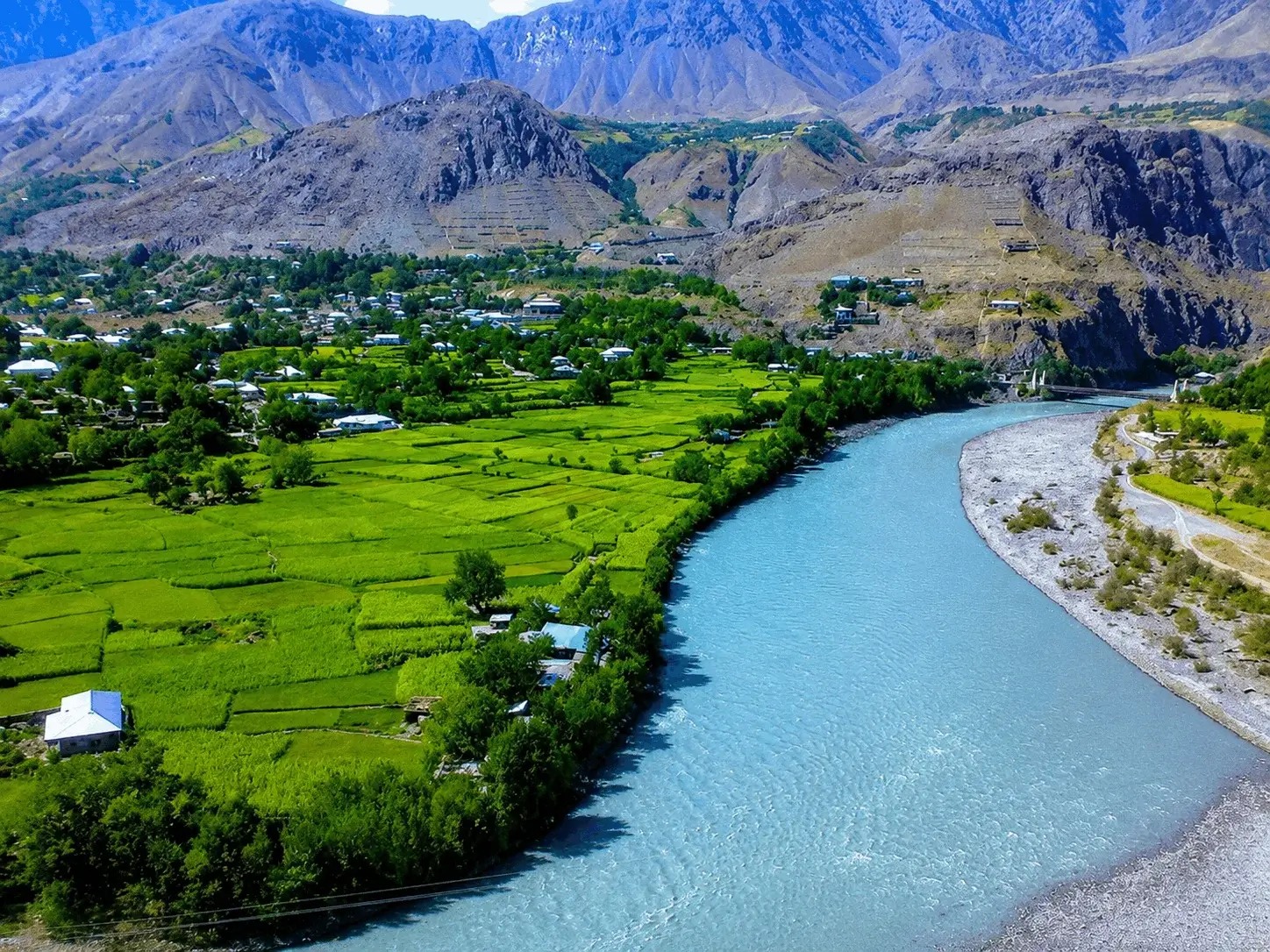
Bumburet, Rumbur and Birir
A continuously inhabited cultural landscape in the Hindu Kush, where belief, settlement, agriculture, festivals and the natural environment remain connected.
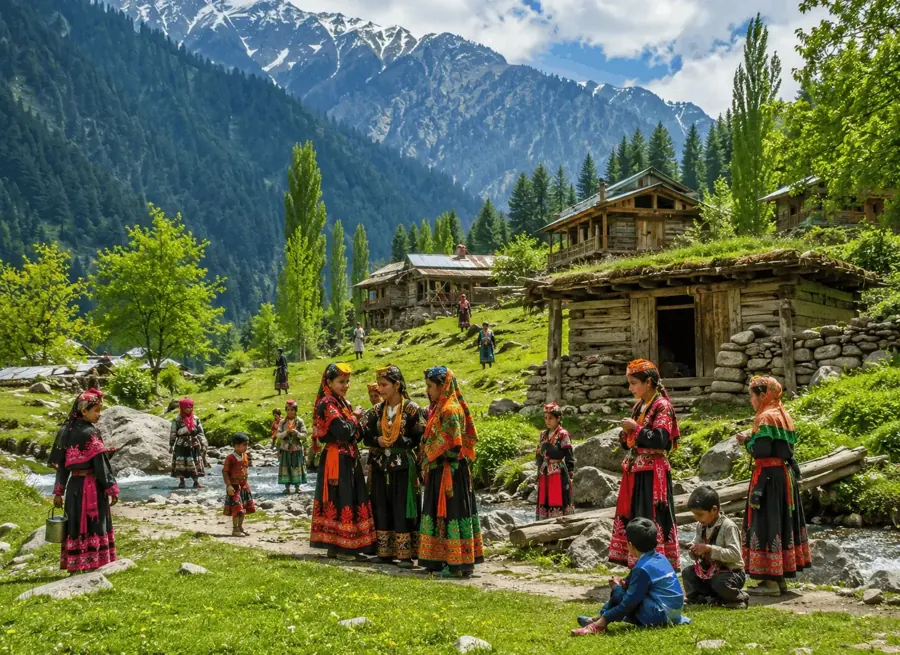
Bumburet Valley
Often the first valley selected: accommodation, public cultural places, village walks and the Kalash Culture Centre in Brun.
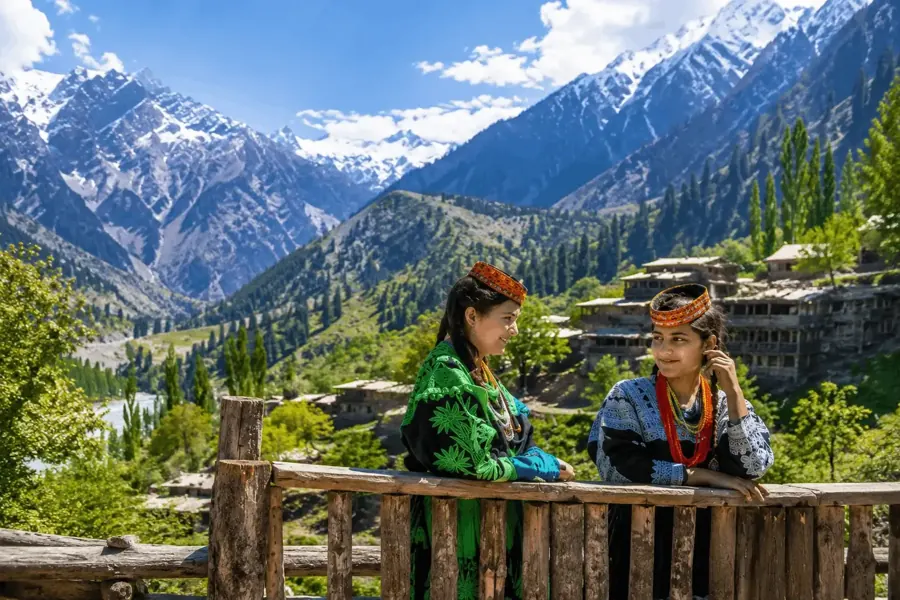
Rumbur Valley
Slower pace, oak forest scenery and close attention to village life around Kalash Grom and Balanguru.
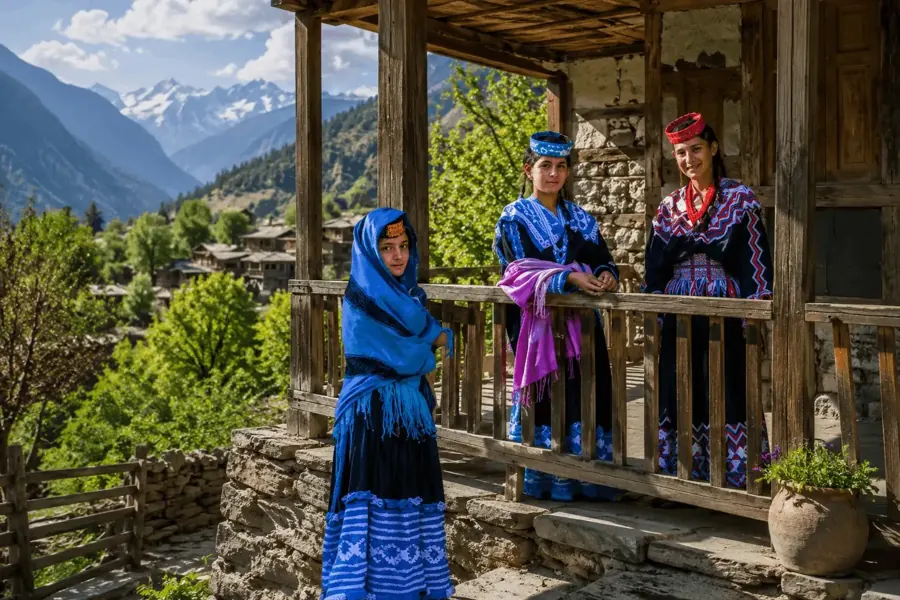
Birir Valley
Quieter route through Guru, Aspar and Biyal with traditional multi-level homes and oak-woodland trails.
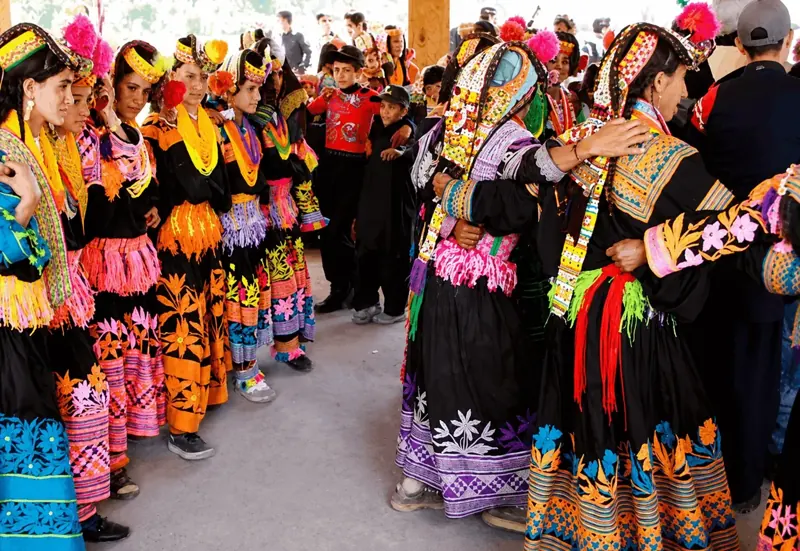
Visit a Living Community, Not a Cultural Display
The Kalash people maintain a distinct language, belief system, oral tradition, seasonal calendar, style of dress and relationship with the mountain landscape.
Kalasha is a Dardic language with traditions of folk songs, stories and epics. Music and dance are not simply entertainment they can carry religious, social and historical meaning.
Traditional women's clothing includes a black robe and an embroidered headdress decorated with shells, beads and ornaments part of daily and ceremonial identity, not costumes prepared for visitors.
UNESCO also recognizes Suri Jagek, the Kalasha system of observing the sun, moon, stars and shadows in relation to local topography inscribed in 2018 on the List of Intangible Cultural Heritage in Need of Urgent Safeguarding.
Choose Your Tour Around a Real Festival
The main Kalash festivals follow seasonal changes, agriculture, herds, food and religious life. They are community events, not performances arranged whenever a tour group arrives.
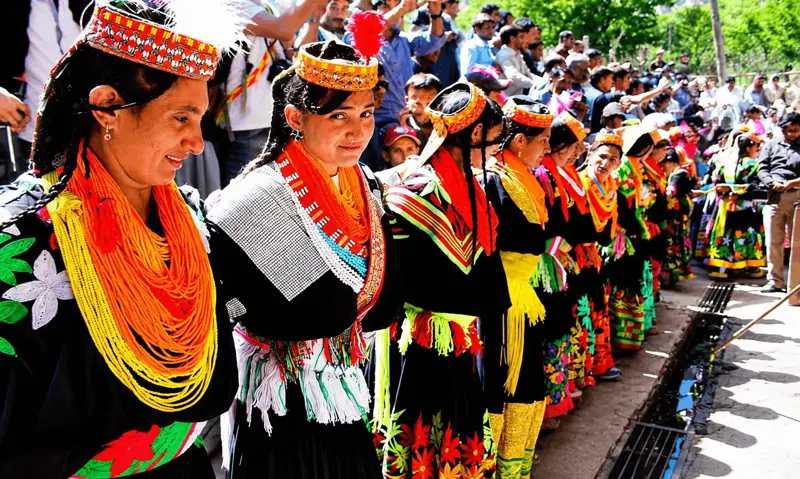
Chilam Joshi / Zhoshi
May 13–16Meaning: Spring blessings for the safety of crops and herds.
Planning: Arrive before the busiest public days.
View Festival Tour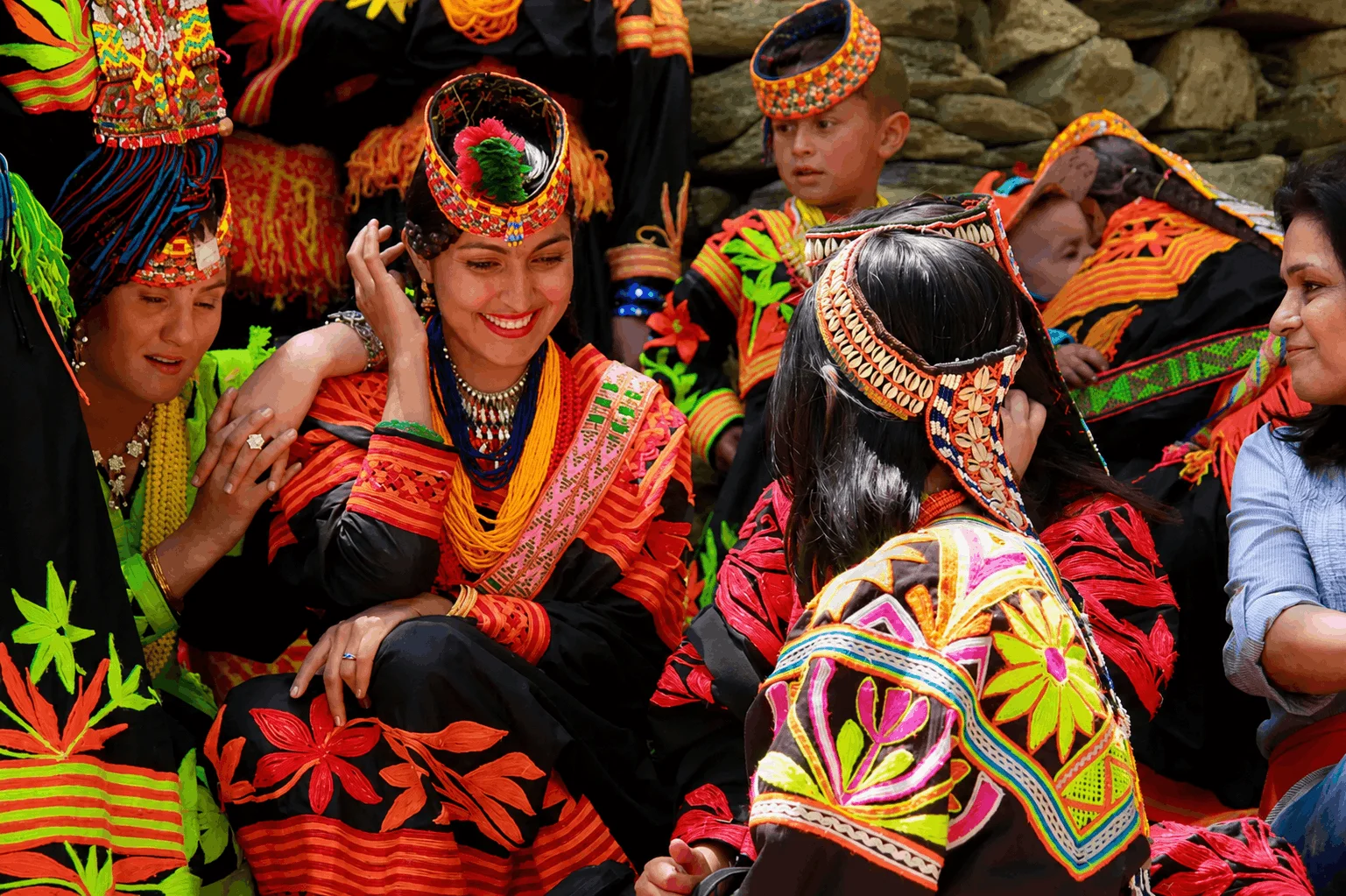
Uchaw / Uchal
August 22–23Meaning: Summer and the abundance of dairy from high pastures.
Planning: Reserve accommodation and transport early.
View Festival TourPhoo
Around mid-OctoberMeaning: Ripening crops and fruit, and the return of livestock.
Planning: Exact dates must be confirmed locally.
View Festival TourChaumos / Choimus
December 10–23Meaning: The most important winter festival, approach of the Kalash New Year.
Planning: Allow additional time for winter travel.
View Festival TourRat Nat a smaller season of song, dance and courtship gatherings runs June 21 to August 21 and culminates in Uchaw.
A Balanced Route for First-Time Visitors
A planning framework. The final sequence should change according to your starting city, festival dates, road conditions, accommodation and interests.
- 1Day 1Travel to Chitral
Meet your driver, begin the journey to Chitral, arrive and receive a briefing about route, weather and cultural etiquette.
- 2Day 2Explore Chitral Town
Visit selected public places Shahi Mosque area, riverfront, local market or museum with regional history from your guide.
- 3Day 3Chitral to Bumburet
Travel via Ayun into Bumburet Valley. Calm orientation, Kalash Culture Centre where available, guided walk through public village areas.
- 4Day 4Bumburet Culture & Festival Program
Explore public sites around Brun, Krakal or Batrik. On festival dates the day is organized around locally confirmed public activity.
- 5Day 5Rumbur Valley
Village walks, forest scenery and cultural interpretation of ceremonial buildings, graveyards and gathering spaces.
- 6Day 6Birir or Garam Chashma
Choose between a Birir cultural walk or a Garam Chashma extension into another part of the Chitral region.
- 7Day 7Return Journey
Depart after breakfast and continue toward Chitral, Islamabad, Peshawar or your next destination.
What Can Be Included?
A private or small-group package built around your dates, starting city and comfort level.
- Private or shared transport (as stated in the proposal)
- Experienced driver
- Chitral and Kalash accommodation
- Local Kalash Valley guide
- Breakfast (where specified)
- Airport or hotel pickup (where specified)
- Village and cultural-site visits
- Festival-date planning
- Basic trip coordination
- Taxes and service charges (where stated)
- International flights
- Pakistan visa fees
- Personal shopping
- Unlisted meals
- Travel insurance
- Medical expenses
- Tips
- Activities added during the trip
- Costs from personal itinerary changes
How to Prepare for Chitral and Kalash
Most itineraries begin from Islamabad or Peshawar and continue by road. Do not build a tight international connection around an unconfirmed domestic flight.
The Lowari route has improved access. Roads inside the Kalash valleys are narrower vehicle choice depends on road condition, season, group size and mobility needs.
Chitral has more hotel choices than the valleys. Valley rooms are simpler and limited during festivals book early for May, August and December.
Carry backup cash. Do not rely entirely on cards, mobile data or continuous electricity. Download documents before entering remote areas.
Personal medication, sun protection, walking shoes and seasonal layers. Travel insurance is strongly recommended.
Visa, registration and access requirements can change. Check official Pakistani entry requirements and your government's latest advice before departure.
Visit as a Guest
The most important rule is simple: the Kalash valleys are people's homes.
Local Knowledge with Professional Accountability
An incorporated and licensed Pakistani tourism company bookings are handled through a registered business.
Local guides who understand valleys, festival seasons, village routes and cultural boundaries.
We plan around established festival windows and locally confirmed schedules no invented Phoo dates or guaranteed rituals.
Families, solo women, photographers and festival groups need different vehicles, guides and pacing.
A clear proposal with itinerary, accommodation plan, transport, inclusions, exclusions and payment steps.
Guides explain where visitors are welcome, where photography needs permission and when a place must remain private.
Choose the Travel Style That Fits You
International Visitors
Complete planning connecting arrival logistics, Chitral transport, local accommodation and cultural guidance.
Families
Sensible pace, comfortable stops and a guide experienced in welcoming parents and children.
Solo Women Travelers
Private planning and a recommended family-oriented female guide, subject to dates and availability.
Photographers
Landscapes, architecture and public cultural activity always with consent and respectful distance.
Festival Travelers
Built around real annual dates with arrival time before the busiest public events.
Cultural Researchers
Longer stays for guided interpretation, museums, village walks and unpressured conversations.
Chitral and Kalash Tour FAQs
What does a Chitral and Kalash Tour include?
A typical tour combines transport, accommodation, Chitral sightseeing, visits to Bumburet, Rumbur or Birir, and guidance from a local cultural guide. Exact inclusions depend on the selected package.
How many days are needed for Chitral and Kalash?
Allow at least six days. Seven to eight days is better for Chitral town, two or three Kalash valleys and a relaxed pace. Festival tours may require additional days.
When is the best time for a Kalash tour?
Visit from May 13–16 for Chilam Joshi, August 22–23 for Uchaw, around mid-October for Phoo, or December 10–23 for Chaumos. For general sightseeing, choose a season that matches your comfort with heat, rain or winter conditions.
What are the three main Kalash valleys?
Bumburet, Rumbur and Birir. Together they form the core of the Kalasha Valley Cultural Landscape on Pakistan's UNESCO World Heritage Tentative List.
Is Bumburet the same as Kalash Valley?
No. Bumburet is one of the three principal Kalash valleys. Rumbur and Birir are the other two.
Which Kalash valley is best for first-time visitors?
Bumburet usually works best because it offers accommodation, the Kalash Culture Centre and access to several public cultural places. Rumbur and Birir can be added for a deeper experience.
Can tourists attend a Kalash festival?
Visitors may observe public festival activity when the community permits it. A tour booking does not provide automatic access to private rituals, sacred buildings or every ceremony.
Can I photograph Kalash people?
Ask before photographing any person. Do not pay for portraits, and do not photograph ceremonies, children or private spaces without clear permission.
Is Chitral and Kalash suitable for families?
Yes. A family tour should use suitable accommodation, manageable driving stages and flexible walking options. Share the children's ages and any mobility needs before booking.
Can solo women travel to Kalash?
Private itineraries can be arranged for solo women. A family-friendly female local guide may be requested, subject to availability.
Do international travelers need a special permit?
Requirements depend on nationality and current government procedures. Confirm visa, registration and any local documentation before traveling rather than relying on old online advice.
Is the Kalash Valley a UNESCO World Heritage Site?
Not yet. The Kalasha Valley Cultural Landscape was added to Pakistan's UNESCO World Heritage Tentative List in March 2026 a step toward possible nomination, not full inscription.
Can I combine Kalash with Garam Chashma?
Yes. Garam Chashma can be added as a day trip or overnight extension, depending on your travel time and road conditions.
Are Kalash festival dates guaranteed?
Zhoshi, Uchaw and Chaumos have established annual date ranges. Public timings and access can still change. Phoo follows the harvest, so its exact date must be confirmed locally.
How do I book a Chitral and Kalash Tour?
Send your preferred dates, number of travelers, starting city, festival interest and accommodation preference. Our team will prepare a written itinerary and quotation.
Request a Chitral and Kalash Tour
Tell us what you want from the journey a spring festival visit, a family holiday, a photography tour or a slower cultural route through all three valleys. Our team will review your dates, starting city, group size and preferred travel style, then send a written proposal.